Brit living in Belgium and earning an income from building interfaces. Interestes include science, science fiction, technology, and European news and politics
2797 stories
·
12 followers

Conference laps up Andy unplugged as he offers chance to take road less travelled | John Crace

1 Share

Nothing was off the table, no coded hints, and by the end no one could be in any doubt about what Burnham believed

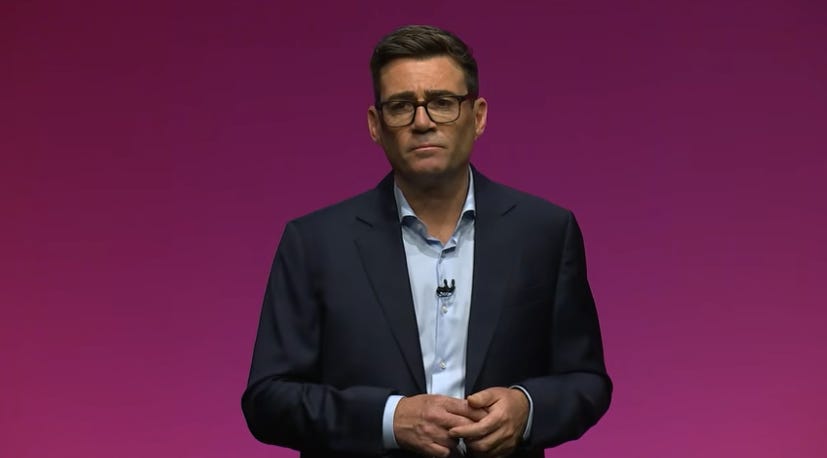
You’ve got to hand it to Andy Burnham. He left nothing out on the pitch. It would have been so easy to play it safe. To deliver a traditional leader’s speech to a home crowd. One we’ve been seeing from leaders of all parties for more than 15 years. Something warm, a feelgood vibes word salad with the odd minor spending announcement thrown in. Hell, the Labour conference would have probably settled for it. They already had all the hope that they had come for. The hope that they were back in with a fighting chance of winning the next election. They wouldn’t have even dared think that three months ago.

But Andy did it differently. Just as he had promised. He had said he was a different kind of politician and he duly made good on that. Hope came with honesty, he said. And honesty was what we got. Nothing was redacted. No coded hints. Come the end of his hour-long speech, no one could be in any doubt about what he thought. More than that, what he believed.

Continue reading...

Read the whole story
PaulPritchard
2 hours ago
reply
Belgium
Share this story
Delete

Burnham speech: An astonishing moment of radicalism and commitment

1 Share

No point messing about. That was the best conference speech I’ve ever seen. At one point I lost all ability to speak and simply sat there mute, unblinking, wondering if I’d had an episode and this was all some kind of hallucination. I’d rub my eyes and stare closer and yet it was all still really happening. It was all real. The prime minister of Great Britain and Northern Ireland was speaking honestly about our problems and committing to the solutions.

For a long time now, we have been stuck in a conspiracy of silence. Privately, in whispered conversations in the corners of Westminster bars, people will acknowledge the world as it really is. They will nod wisely and with weary resignation as they acknowledge that the electoral system is broken, social care is in a state of decay, the pensions triple-lock is unaffordable and Brexit has damaged us economically. But they will not do so publicly.

These truths are considered unsayable. You can’t go into an election promising a reduction in spending for the elderly - they’re the one demographic which is most likely to vote. They’ll murder you out there. You can’t suggest that we might return to Europe - you’ll open up that whole populist can of worms again. And most of all, you cannot entertain electoral reform, because it means you’ll never govern alone again. To speak these truths is to commit political death.

And now here is this guy, Andy Burnham. And he is just going to straight-up break those rules one by one. Mother of god, you think, what am I watching. How is this happening. What on earth is going on.

Simply put, he is acting with a degree of courage I never dared hope a prime minister would demonstrate. The commitments he made today would make Britain a kinder, wealthier, better country. But more than that, they would serve as a demonstration: that mainstream politics still has the strength to grapple with the problems Britain faces and solve them.

And now, inevitably, they all come out to play, teeth flashing in the dark. All the small politicians, doing exactly as predicted, a clockwork voice from a mechanised throat. “It’s frankly outrageous that Burnham is considering scrapping the triple lock,” Reform’s Robert Jenrick said. Unite’s general secretary Sharon Graham told the Times it would be “almost electoral suicide”. An anonymous Cabinet minister told Politico: “I would like to actually win the next election.” The Express front page read: “Scrap triple lock and you will face voter revolt.”

There’ll be more of them. Expect weeks of anonymous Labour MPs stressing the dangers. They are exactly the type who got us into this mess: unwilling to lead, unwilling to recognise reality for fear of offending voters, unwilling to solve long-term problems if it presents the slightest short-term risk.

Perhaps they’ll win. Probably they will. Perhaps all these ideas will be badly formed, or mutilated by compromise, or, more likely, become the latest victims of an attention economy in which there’s always something more immediate for a prime minister to focus on. Or perhaps the bond markets will take fright at the ambition and spiral badly, killing this glimpse of a better way of doing things.

But today felt different. Burnham could clearly see the dangers. He could spot precisely how he would be attacked. He knew just how exposed it left him. And he did it anyway.

“I accept I may pay a political price,” he said. “But someone has to go through the pain barrier and rip the plaster off.”

Subscribe now

Burnham made several commitments today, some more meaningful than others. Personally, I find the anti-neoliberalism stuff a bit simplistic. Neoliberalism’s hold over this country ended with Brexit, when the right turned its back on free trade and austerity economics, almost as an afterthought. That opened up a space for much more interventionist policy from Labour that it has eagerly inhabited ever since.

It was when Burnham turned away from his favoured topic of public ownership of services that he became more compelling. The prime minister promised a National Care Service: universal, free at the point of use, to which everyone contributes. It would be funded by the end of the triple lock - to be replaced by a double lock. The earnings leg has been kicked out, with the state pension rising by the higher of inflation or 2.5% from 2030, but with periodic adjustments if earnings in the economy are rising higher.

I caught my breath as he said it. Christ alive I thought, he was actually doing it. He was doing the thing they swore could never be done, because the electoral consequences were too severe.

Would that raise enough money? No, certainly not, no matter what he claims. There’ll be further painful decisions to make which Burnham did not mention today. A care service will be very expensive and savings from ending the triple lock will be modest in the short term, only building up over the long term.

But announcing the two measures in this way, side by side, provided the best possible way of convincing older voters to accept the change. It provided a moral foundation for what was taking place. It delivered a narrative and a mission, a comprehensible moral pathway. And just as importantly, it offered a signal to the markets that the government is prepared to take the big decisions necessary to get spending under control, even as it unveils one of the most ambitious spending proposals in recent years.

Subscribe now

One of the most noticeable aspects of Burnham’s personality is his sense of emotional presence. He really does look as if he is listening to people, as if he is present in the moment rather than going through the motions, doing the politician-kisses-baby thing.

This has stood him in good stead. I suspect that the manner this policy is being presented comes from countless conversations on the doorstep, from an intuitive understanding of what it takes to win people over to your position.

That doorstep conversation is very easy to visualise. The deal is clear: A move from a triple to a double lock, but a guarantee that the state pension rises every year. And in exchange, guaranteed free care.

He presented this idea by speaking about his grandmother. When she went into the care home, someone pocketed her engagement ring. The care she received was “not worthy of the name”. And despite all that, they’d had to sell her house to pay for it. “What an indictment of my generation of politicians,” he said. “Too cowardly to fix something as basic as the care we give each other”.

Then he spoke directly to care workers themselves, and noted the way they had been ignored by politicians for decades, working on pitiful wages in terrible conditions. “You are not invisible to me,” he said. “I see you. I thank you. And I am sorry that my profession has let down yours for so long.” He either believes this stuff or he is one of the best actors I have ever seen.

I think he believes it. For what it’s worth, I think the bloke we see on that stage is the same bloke he is with the cameras off. There’s a killer in there, of course. You don’t get to this level without being a killer in some way. And there is obviously a massive ego hiding behind that unassuming demeanour. But the basic effectiveness Burnham demonstrates comes, I suspect, from a sense of authenticity and a connection with his feelings.

Until recently, I thought Nigel Farage was the most effective communicator in modern politics. Now, the Reform leader seems angry, thin-skinned, self-pitying, whiny, absurd. What we witnessed today was a masterclass in political communication which makes Farage look like an amateur. Look at how he did it: A personal story, an appeal to the emotions, a radical proposal, an explanation of why it is fair, a push for voters to back him. The heart and the head operating as one.

Subscribe now

Shortly afterwards, he spoke about his father, who died a couple of weeks ago. You could tell that he was about to address it because suddenly he stopped talking. There was silence. And that silence expanded for what felt like a very long time - perhaps 30 seconds, aeons in the world of public speaking. Eventually the audience got nervously behind him, applauding, cheering him, getting to their feet. He thanked them and finally found a way of continuing.

In the minutes that followed he delivered probably the most effective defence of the United Kingdom over Welsh and Scottish nationalism that I have witnessed, one which casually dismissed the usual transactional statements for a heartfelt expression of a shared history and the endless advantages of combining many nations in one.

“Whatever its flaws, this country gave my dad a good life,” he said. He fought through the tears, he battled his way through the words, trying to get them out. But around this point, he seemed in genuine danger of actually breaking down on the stage.

If I was on his staff I think I would have advised against this section. The feelings were just too raw, too exposed. It was too dangerous to allow yourself to feel them at an event like this, in the white light of the cameras, at one of the key political moments of the year. This country now accepts men crying, but I am not sure it can handle a leader literally breaking down in front of a large audience. But obviously I would have been wrong. In fact, I sat there and realised with some embarrassment that I was myself crying.

“Britain is not perfect,” he said. “It could be better and we will make it so. But it still stands for something worth saving and worth fighting for.”

Imagine his opponents watching this. Badenoch. Farage. Swinney. All the way through the speech, they’ll have noticed the opportunities he offers them. Attack line here, vulnerability there. Death tax, dementia tax, whatever. We know how that old turgid game plays out. But deep down, in their bones, they would surely think: fuck.

How do you fight this? How do you take on someone who is able to speak with this degree of commitment and emotional intelligence, this ability to bring people with him?

Subscribe now

On Brexit, Burnham promised to lay out options for a long term relationship. He framed this as a break, which means that he clearly intends to go further than Starmer’s vision of inching alignment. I suspect the options will involve associate status (whatever that is, very much tbc), customs union membership, single market membership and full membership.

There is now a clear battleground for pro-Europeans to enter and an administration which seems open to listening to what they have to say. The idea of Labour going into the next election with a commitment to Rejoin is unlikely, but it is not fanciful. There is much to play for here.

On electoral reform, the commitment was much firmer: a national commission, with whatever proposals emerge from it in the Labour manifesto at the next election.

Sometimes when you write these things and you feel years of history weighing down on each key as you touch it. For how long have reformers fought this battle? How many decades of thwarted hopes and aspirations? And each time we would torture ourselves with the same seemingly unsolvable riddle: How can you ever get a prime minister to implement reform when any party in government will by definition benefit from the system as it is?

And now here he is, this guy, and he is doing it. Perhaps it had to be someone like him - someone from inside the system who saw what was wrong with it, left, and could return as an outsider. Regardless, it is actually happening. Things which reformers have hoped for their entire lives are now tantalisingly close. In touching distance.

Subscribe now

I am slightly baffled by what is going on here. I am not used to being happy. It does not suit my disposition. But what we saw today was a masterclass in how politics should be done: a man who was prepared to tackle problems rather than avoid them, prepared to raise solutions even though they leave him exposed, prepared to defend radical causes his predecessors would have run a mile at. And more than that, we saw it done with a level of verve and skill which is practically unheard of in modern politics.

There’s not a lot of times like this. Not a lot of times when the stars align and things that previously seemed impossible become tenable.

It would be easy to be on a face of studied cynicism at this point. It is obviously true that plenty can go wrong, the plans are plainly very sketchy, and the obstacles facing him are immense. You always look more sensible by being guarded than you do by being impressed. But we have to be able to recognise and celebrate the things we’ve always called for when they finally come to pass. And today, they came to pass.

What thing to witness.

Striking 13 is free, for everyone, forever. If you can afford it, become a paid subscriber to keep it free for those who cannot.

Read the whole story
PaulPritchard
2 hours ago
reply
Belgium
Share this story
Delete

To the people voting for Nigel Farage: is this really the finger you want on the red button? | Marina Hyde

1 Share

The Reform leader’s reaction to the RAF Fairford affair is again revealing. If what’s needed is a steady hand and cool head, he’s not the guy

Another week, another chance for Nigel Farage to demonstrate his literally hysterical leadership inabilities. For a guy who supposedly valorises the wartime British spirit, Nigel would genuinely have had to have been interned during that conflict on account of his serial predilection for spreading panic and unverified information at any given chance. The weekend incident near RAF Fairford was simply the latest in a long line of occasions that make you suspect the poster on the wall at Reform HQ reads simply: “Lose Cool and Start Shitposting.”

Despite its popularity now, the famous “Keep Calm and Carry On” poster from the second world war was almost certainly never displayed in that conflict. Although more than 2m copies of it were printed, it was in fact held in reserve in case a really serious crisis hit. Which, when you consider even the blitz apparently didn’t clear the bar, it is almost impossible to conceive of in our era where comparatively minuscule incidents force certain party leaders into more than 24 hours of madly irresponsible and emotional online incontinence.

Marina Hyde is a Guardian columnist. Her new book is What a Time to Be Alive! To support the Guardian, order your signed copy at guardianbookshop.com. Delivery charges may apply

Continue reading...

Read the whole story
PaulPritchard
8 hours ago
reply
Belgium
Share this story
Delete

The Gist: What if?

1 Share
The Gist: What if?

What if...

What if the November 2023 Dublin riot had never happened?

What if Elon Musk had not bought Twitter by mistake and then turned it into a far-right propaganda machine?

What if the Tech billionaires hadn't spent all of the COVID years in a WhatsApp group, collectively railing at society's audacity at impeding their whims, even a little bit, and gradually determining to destroy society so it couldn't happen again?

What if our political-media class didn't become mesmerised by the false belief that the path to power lay though making the lives of foreigners worse?

What if, in other words, we were not living like medieval peasants, at the mercy of entire strata of unrestrained blithering idiots granted power without ability.

Well, that would all be nice, if true. Unfortunately, as the past fortnight has shown, that isn't the world we live in.

Our political system was tuned over decades on the slow daily feedback loop of newspapers and set news broadcasts to respond to the expressions of public will that could persist through the layers of editorial and commercial gatekeeping. In particular, Ireland's system, due to its voting model and the small size of the population, allowed politicians to quickly work out what the public wanted. It might not always give them it, but it did know what was popular and what wasn't.

But drop unceasing social messaging onto that same system, tuned like a spider's web to pick up bare vibrations from the furthest edge, and it's like tearing that same web with a broomstick. The signal is interpreted as so strong as to be an emergency, a crisis. But it's a crisis that doesn't abate, because it keeps blaring even after steps have been taken towards meeting its demands.

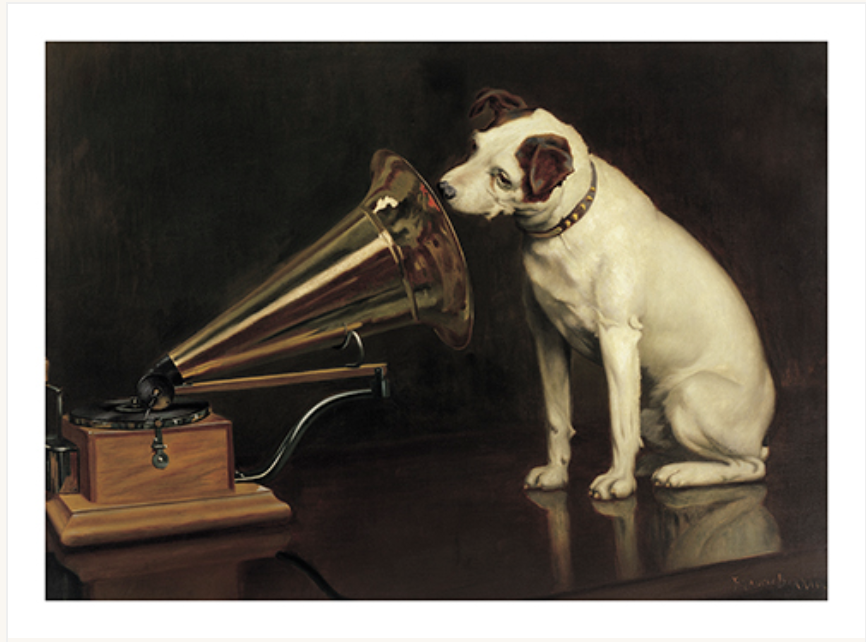
Except, it is nothing of the sort. The politicians have become like Nipper, the loyal Jack Russell dog, listening intently to the automatic, unending and completely synthetic version of His Master's Voice.

The Gist: What if?
Let's see what the public are saying on X

The consequences for this are severe. When the department store managers can't tell the difference between the customers and the shop dummies, whoever can arrange the most shop dummies can make it appear that a product, or a policy, is a hit or a flop.

Which leads us seamlessly to Jim O'Callaghan. The Minister for Justice announced he loved seeing the joy of new citizens at the swearing in ceremonies and also he wanted to urgently put a stop to it.

The stated reasons for stretching the citizenship requirements out by additional years were opaque to the point of incoherence. That's because the actual reason for it was so clear, nobody even bothered to invent a plausible cover story. The government, and Fianna Fáil, was making its pitch to the shop dummies it has mistaken for the general public to meet their wax cylinder demands to make life harder for foreigners.

This is a stupid policy, obviously. Quite apart from the fact that the people who reside and work in Ireland for years are doing exactly what the Government has always wanted from Good Immigration. What this shows us is that now, even in their own economically reductive system, they're not willing to acknowledge there is any such thing as a good immigrant.

This policy, without doubt, would be one of the most self-defeating and self-destructive that Ireland, in particular, could take. It would rival DeValera's Economic War and protectionism of the 1930s-1950s for sheer bladed self-denosing.

In 2021 the CSO projected an economic demographic crisis as the number of older people increased and the number of working people supporting them fell. However, that crisis was largely projected on what turned out to be wild underestimates of Ireland's likely net migration. Migrants are overwhelmingly more likely to be of working age or younger. Where the CSO had projected net migration of between 10,000 and 30,000 per year, Ireland has benefited from an unforeseen safety net of net migration between 48,000-93,000 per year.

The shops are open, the hospitals are staffed, the restaurants are producing tasty food, the mushrooms are being picked and the universities are attracting talent. And, socially, stagnation is avoided in favour of change, horizons are broadening and schools that would have shut continue to educate children.

And this is what we want to dissuade?

And all because of the tiny number of men (overwhelmingly) who are assembling crowds of baying shop dummies, screaming that they are The Master's Voice. All of them demanding hostility first and reasoning not at all when it comes to anyone, Irish born or not, who might have a complexion darker than that of a peeled potato.

In fact, for this army of mannequins and their dummy owners, to be Black and to be Irish is the greatest affront and standing refutation of their abject racism.

And so, our Minister for Justice has acted to protect their feelings by delaying, obstructing and trying to dissuade people of all shades from obtaining the citizenship we are so blessedly lucky they still want.

In response, those of us who are the actual voters can only say clearly, at every turn and in every available outlet, that a healthy, welcoming and self-assured Ireland is one that has more Black Irish people and far fewer dogs listening to His Master's Voice.

Read the whole story
PaulPritchard
10 days ago
reply
Belgium
Share this story
Delete

European democracies are running out of time to turn away from the abyss | Rafael Behr

1 Share

Far-right parties, Maga ideology and Kremlin money are conniving to suffocate liberal idealism for another generation

Not all that long ago, Europe was a beacon of liberal idealism. One memoir recalls it as an era “comfortably saturated with confidence in the unfailing and binding power of tolerance and conciliation”. The economic system seemed obviously preferable to barbarous alternatives. “People honestly believed that the divergencies and the boundaries between nations and sects would gradually melt away into a common humanity,” the author added.

Those words could describe the spirit of globalisation at the turn of the millennium. They were written in the 1930s by Stefan Zweig, reflecting on the optimism of late 19th-century Vienna from the perspective of a Jewish émigré whose world had been destroyed by murderous nationalism. Zweig took his own life in 1942. He never saw fascism defeated. He couldn’t have imagined a renaissance of liberalism in the second half of the 20th century so complete as to attain a pitch of complacency rivalling the one he remembered from his childhood.

Continue reading...

Read the whole story
PaulPritchard
20 days ago
reply
Belgium
Share this story
Delete

The Jason Arday Reckoning

1 Share

I haven’t been able to shake the Jason Arday story since writing about it on Monday. The news that after weeks of being unrelentingly hounded in the press, an autistic, black, working class Cambridge professor had been found dead.

And yesterday, after a week of dwelling on it, I had a moving conversation with one of Jason Arday’s childhood friends. In the hundreds of articles before his death and after, no-one had reported on the kind, gentle, extraordinary man he and his friends knew. I’m not going to go into that here or what he has to say about his close-up view of his friend’s treatment by the press. I’ll do more on that in next few days.

I wrote this newsletter before that conversation and although he fleshes out so much more of what’s here, I thought it was worth putting it out first. Thank you, as ever, for reading.


Jason Arday wasn’t the first person to have been hounded by the UK press and he won’t be last.

We know that more certainly than ever by the response since his death from large parts of the British media class. I’ve been gobsmacked by the lack of humanity, by the knee-jerk defensiveness, by the silence from the senior leaders of these organisations. Are we just going to cover this up and move on? Really?

Have you noticed that it’s already fallen off the news cycle? Is that because it’s not newsworthy? If so, why is it still trending day after day on social media?

If a kettle had the same safety rating as the British press, it would be banned from sale. It’s not just a potential death trap. It is a death trap. That’s what this story tells us.

But what we’re still failing to acknowledge is the extent to which Jason Arday already knew that. He knew exactly how black academics are targeted, he not only understood it to be a “playbook”, he’d contributed to the literature on it. It was the same bad-faith process that had seen Claudine Gay, the first black woman to be president of Harvard, forced from her position. But she was not a one-off example and when Arday was asked to deliver a prestigious keynote lecture, it’s what he picked as his topic, titling it “Wanted Dead or Alive: the Playbook”.

That lecture title and topic is right there in the introduction of the Guardian article that marked an important turning point in the story. The day of its publication, August 5, marked the moment the story left the right-wing echo chamber, which Arday could rationalise and dismiss, and species-jumped into the wider media.

It was no longer a right-wing racially motivated witch-hunt. It was now a free-for-all, and this exposé that went beyond the claims of plagiarism to interrogate details about his personal life marked the moment.

Arday’s friend Kehinde Andrews said that he’d asked Arday at the beginning how long he thought the media attacks would last and he’d said two days, three days max. It was already seven days in when this was published, one day after his friend, Professor Simon Baron-Cohen, a world-leading autism expert, said that he considered him a suicide risk.

It’s the final sentence that’s unbearable. Arday had an internal roadmap of where this led. He knew the stakes, the toll, the fall-out and the possible pathways.

I wrote a story, years ago, about a cluster of teen suicides in Bridgend, Wales, and in the process learned a lot about suicide contagion that’s never left me. It’s a powerful, poorly understood transmissible condition that collapses both time and space. It transmits down generations and across continents. It’s an idea, a permission, an almost algorithmic-like pathway. Jason Arday’s brain had already trod that path. It was a fact in the literature that he’d cited and footnoted. He’d already mapped the exit route that others in his position have taken.

This entire story is about shame. And maybe where you stand in your understanding of it is where you stand with your own relationship with it, with what is the most human emotion of all. Because we were all bystanders in the shaming of Jason Arday. We all witnessed in real time as he was ridiculed, mocked and undermined by an overwhelmingly white, middle-class academic and media establishment, many of whom come from generations of privately-educated privilege. Here was a black working class professor whose early life had been shaped by academic underachievement and cognitive disabilities being told, repeatedly, overwhelmingly, with no pushback from any quarter, that he wasn’t academically and intellectually good enough.

In the last few days, so much new information has finally come to light, including this which I posted on BlueSky yesterday morning, by Professor Jason Stanley. He points out that academia has easily quantifiable metrics that he said no journalist had apparently checked.

Stanley pointed out if a journalist had checked those metrics and then compared them against other scholars in the field, they would have reached this conclusion.

The unassailable fact that Jason Arday was cleared of plagiarism by Liverpool John Moores, the university that awarded him his PhD, is even now, almost entirely absent from the reporting. But then that’s because journalists haven’t bothered to find out what academic plagiarism actually is, in Stanley’s view:

Maybe he wasn’t such a dummy after all? He wasn’t “found guilty of plagiarism” as I read in one piece yesterday. And even some of the most sympathetic coverage is still calling him a “fabulist”, a “fantasist”, a “fraud”. Because that’s what the “responsible” “public interest” reporting told us. Yesterday’s leader in the Economist, the leading article in one of Britain’s most prestigious outlets, continued to mock the claims about Arday’s marathon running which it claimed he did on a “broken leg”.

Why would an outlet of this calibre and resource fail to fact check even the basics of this claim? The Guardian quote is with regards to a different claim, about the smear campaign and Arday never said he’d said he’d broken his leg. He said he’d kept running on a hairline fracture. And guess what? Long before he was famous, dead, an academic, accused of plagiarism, Cambridge’s youngest black professor, he was just a local lad inspired to raise money for others, as an entire list of local newspapers reported at the time, and yet, until this week, were cited nowhere.

Middle East Eye has tracked them all down here. But why on earth did no-one do so before?

It’s the punching down that’s got me. The bullying. That hasn’t let up since his death.

There are, of course, many thoughtful, intelligent, ethical journalists in Britain. But many are employed in news organisations that participated in the feeding frenzy, that failed in ways small or large. They are not free to speak out. And we’re all guilty anyway. I consumed the Jason Arday coverage even as recoiled at it. But what I didn’t realise, until late, was how suspect, how inadequate, how lacking the underlying reporting was. Commentators were feasting on partial, inaccurate, incomplete material.

And missing, from it all, of course, was Jason Arday. A day or two ago, I spoke to Hannah, my ex-partner’s daughter, who had been affected by the videos she’d seen in her timeline of a gentle, smiling, beautiful man “who seemed almost too pure”.

I was trying to explain to her why I was still so caught up in the story and she thought about it and said: “It reminds me of when I went to meet Alice Ruggles’ parents.” Hannah had a stalker in her 20s and two years ago, we made a BBC podcast where we’d tracked down the man behind it. Alice Ruggles was a girl who’d been in her class at school, who’d also had a stalker. In both of their cases, the police had failed them as they dealt with a terrifying situation outside their control. Hannah survived. Alice didn’t. She was murdered by her stalker. The episode in which Hannah goes to talk to her parents is profoundly sad and moving. You can listen to it here.

The visit to the parents had given her a shivering insight into where this could have led. And maybe, that’s what this story is for me. If I’d lost my defamation case, I would have been Jason Ardayed, I knew that. Just as, she could have been Alice Ruggled. We’d both survived but it wasn’t a given.

And Hannah had been through the painful experience of reckoning with how her stalker had preyed on her, the private anxieties that he’d exploited and the shame she’d carried from that and locked away for years. And that’s what Jason Arday faced too. A careful, skilled manipulative bully who knew exactly where to hit. That’s what Nathan Cofnas, a white supremacist who set the story in motion, did. This piece in Byline Times lays out the race science network of which Cofnas is part and which their previous reporting had showed has made significant inroads at Cambridge University, a subject unreported elsewhere.

We know now how carefully planned this was. But there was so much in the public domain. Professor Jason Stanley was calling out Cofnas’s eugenicist beliefs back in 2020 long before he got the Cambridge gig.

But the point I’m getting to is that the most hideous judgment of all is not delivered by your enemies, it comes from within: it finds a mark somewhere deep inside you, where it collides with the most damaging judgments you hold of yourself on your worst days. That’s what shame is.

Maybe it’s why I feel this story on a different vibration to some of my peers. As a middle-aged woman without the comfort and societal respectability of a nuclear family, I had different anxieties to Jason that were exploited and weaponised but no less painful.

I’ve had heat from calling Jason’s experience a digital lynching but I know of what I speak.

To be clear, social media abuse is downstream from press coverage. It’s not separate and distinct. All media is social media now. And it’s not just why this is a story that’s gotten so under my skin, Hannah points out. It’s also the involvement of the Guardian. Its leadership has issued what amounts to a cease-and-desist letter of anyone questioning anything about its decisions and is now gaslighting Jason Arday’s family and friends and anyone with a pulse who witnessed this entire episode in real time.

Its silence and defensiveness is also exposing its reporters to harm, in my view. They’re the ones with their names on the stories even though they have no power or control whatsoever over when or what is published. It’s editors who make these decisions collectively. These stories went through many hands and the young black and brown reporters whose names are on them are not culpable for any unintended consequences and I really hope that they know that.

I especially hope that the necessary safeguards to protect them are finally in place inside the organisation. This was from just last year:

All news organisations - and universities for that matter - need a Chief Safety Officer. A senior executive who is also an expert in the hybrid threat landscape that journalists and academics navigate. Someone within the institution with the expertise to understand the complexity of the information landscape and the bad actors within it, and how disproportionately black and brown people, women and minorities are at risk.

They would ask the same questions about the people its journalists report on too and they’d understand the news reports don’t exist in a vacuum. Mainstream media and social media are indivisible now, there’s no Chinese Wall. A Chief Safety Officer would have sufficient power and authority to step in when, as I wrote in the last newsletter, a world-leading expert in autism, Professor Simon Baron-Cohen, has publicly stated that the autistic man they are reporting on is, in his view, a suicide risk. Because at no point was Jason’s neurodivergence, his autism, taken into account by, it seems, anyone at all though, as the writer, Will Self, who has two autistic children points out in a furious screed:

In 2019, I proposed the above to the Guardian’s senior management. It was my version of a desperate cry for help. I’d just disguised as a dry, quite academic memo. It was never acknowledged, let alone acted on but at some point afterwards I was invited for lunch with my editor, a kind, humane, overworked man with no financial budget and limited power within the wider organisation to help me in any meaningful way.

As we were leaving, he told me about a threatening phone call he’d received. Someone critical of the paper’s trans coverage had called his home phone and threatened his wife. The paper had made major mistakes in its coverage of the subject, as he’d be the first to admit, and he was unprepared for the ferocity of the backlash. “That’s awful,” I said. “I actually thought of you,” he said. “I thought it was probably a good thing that I got to experience a tiny taste of what you’ve been through.”

I so appreciated those words and they’ve stayed with me. If I had a magic wand I’d want all journalists to take a walk inside the Jason Arday Hate Machine in which I’d use AI to harvest their personal data, identify their inner weaknesses, and then blast personalised posts, articles, videos and tweets at them without respite. In this version, I’d have LLMs create stories that “ask questions” about their school records and their teenage sporting achievements. And I’d want them to remain in there, trapped, with no way out, for weeks, if not months. Though, as George Orwell knew, even two minutes of hate will do.

The lesson of the Arday scandal is that this could have been any of us, could still be any of us.

I mentioned my friend, Jess Search, last week. And I want to share her advice again, here, because maybe it will help someone in some way at some point when they need it most. But as we stood outside the court room on the first morning of my trial, I mentioned the shaming and humiliation that I felt so acutely was coming my way.

“Nobody can make you feel shame,” she said. “It’s what sexual survivors are told.” It comes from within and it’s up to you to decide whether you can and will be shamed. It’s what I would have told Jason Arday. It’s what Gisele Pelicot told the world, that shame has to change sides. Her resilience was truly extraordinary. But it’s a semi-magical quality that some people have and some people don’t and perhaps those who struggle most of all are people whose brains are built differently, like Jason’s.

But shame has to change sides. It’s the media’s turn now. We cannot allow the witch hunt to turn on others and that includes young journalists of colour. But we, the British media should be shamed. Need to be shamed. How else do we prevent the next death?

I feel ashamed. Don’t you? This was a collective failure born of the collective shortcomings of our industry that’s a foundation of our collective information space and what we’re witnessing in part is a collective refusal to acknowledge that it’s been re-shaped by the Silicon Valley-owned platforms that create the incentives that unleashed a click-driven cruel and animalistic bloodlust from the most primitive areas of our brains.

It didn’t just overwhelm Arday, but us too. Our frontal lobes, where we do our most complex reasoning, were hijacked. We lost our moral selves. This should be a moment of reckoning for the entire UK media industry and pretending otherwise is to gaslight his family, friends, the public and the very memory of Jason Arday himself.

Some people have suggested this is the press’s “Milly Dowler moment”, the day the nation recoiled in disgust when it discovered a murdered schoolgirl’s phone had been hacked and sparked a public inquiry. But she was already dead. This is so much worse. Jason Arday was alive. And maybe he still would be. If it wasn’t for us.

How to Survive the Broligarchy is a reader-supported publication. Sign up to receive it in your inbox. For more about autism & to donate to work supporting autistic people, the National Autistic Society is the UK’s leading autism charity.

Read the whole story
PaulPritchard
38 days ago
reply
Belgium
Share this story
Delete
Next Page of Stories