Log in


Some people know from an early age what they want to do in life. I was never one of these. I never in fact found a job I was really suited for. I didn’t have the social skills to be a journalist, nor the confidence in forecasting to stay in investment banking, and I didn’t have the academic’s capacity to devote myself to a narrow field of learning or to
cope with reviewer 2.
In my 60s, however, I have finally discovered what I was cut out for - to be a dilettante. I go to a class on Shakespeare each week, learn Italian, study music theory and composition, play guitar, read novels and history, and cultivate a garden as well as writing this Substack. I know a little bit about a lot of things: you want me on your quiz team.
Which poses a question: which is better - to be a dilettante or a fanatic?
I use the word “dilettante” rather than polymath not from modesty but from reality. Knowledge has advanced so much that it’s no longer possible to be a true polymath. Maybe John von Neumann or Jacob Bronowski came close, but they were rare geniuses even three generations ago. What Adam Smith said of the production of goods applies also to the production of knowledge: it requires a division of labour, people who devote much of their life to a single narrow subject.
We need fanatics who do just this. And not just in academia; musicians, novelists and artists must be fanatical enough to practice enough to master their disciplines.
Fanaticism doesn’t always foster knowledge, though. Liz Truss is a fanatic, but not overly freighted with knowledge or wisdom. She’s an extreme example, but you know many less extreme others, and if you don’t just look at any Question Time audience.
And even where fanatics do learn, Smith’s analogy goes further. Just as there are diminishing returns to the production of goods so too are there to the production of knowledge: research productivity is falling. And fanaticism coupled with pressure to publish leads some academics to falsify data, use AI slop or simply to make claims that aren’t true - hence the replication crisis.
Also, of course, Smith wasn’t entirely admiring of the division of labour. It causes people, he said, to become “as stupid and ignorant as it is possible for a human creature to become.”
That’s perhaps an exaggeration for most professional people. But it contains a germ of truth. The Christmas editions of University Challenge are a little dumbed down because people who’ve had distinguished careers (a malefaction I avoided) haven’t had the time to cultivate wider knowledge.
The fanaticism that leads one to identify closely with one’s work can also lead to professional deformation, a failure to see that one’s professional standards cannot always be applied to the wider world. Academics, for example, are prone to seeing bad policy as intellectual error rather than what it often is - the product of power struggles or bad incentives.
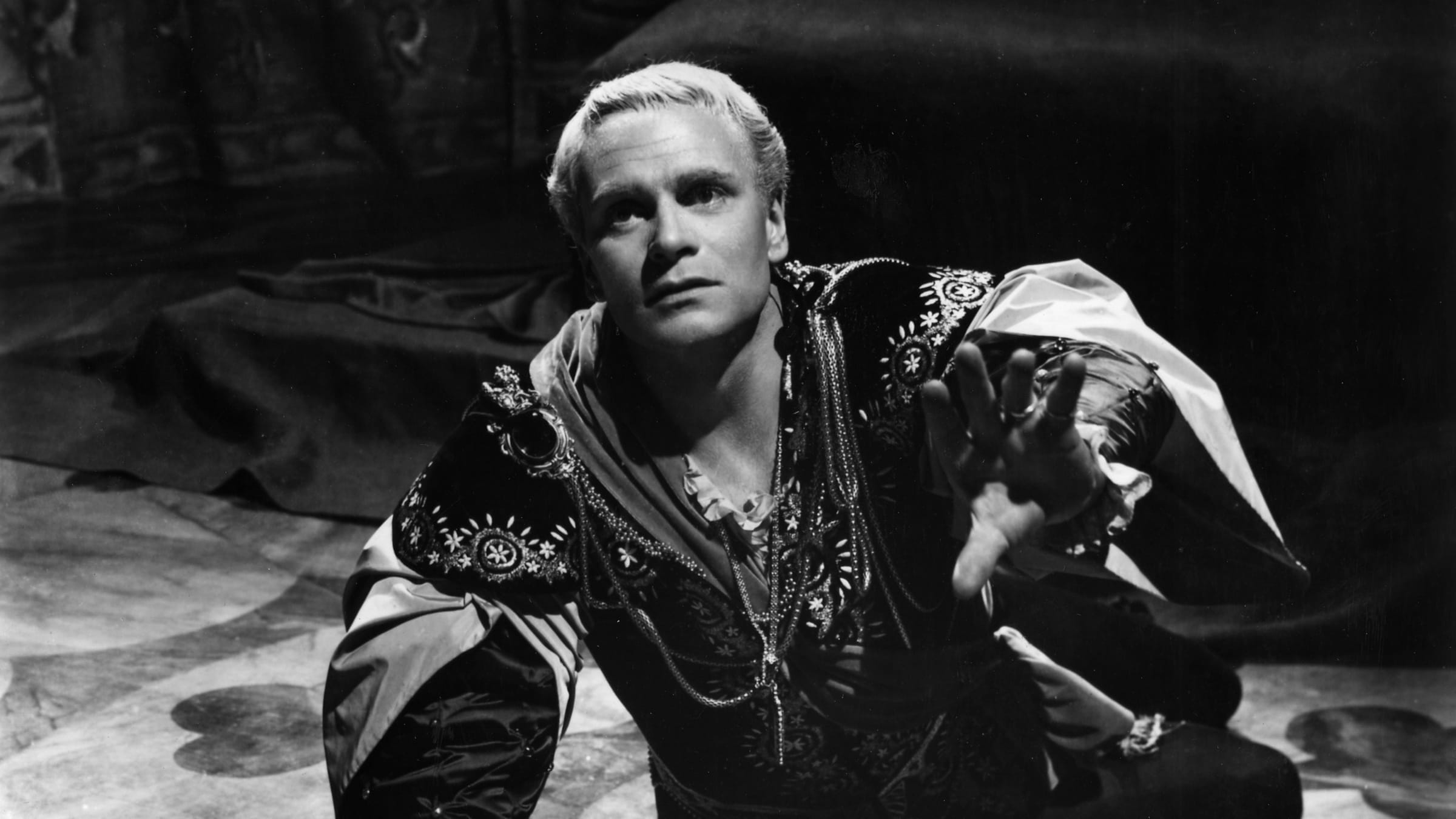
Another fault of the fanatic was exemplified recently by Marc Andreessen saying that people 400 years ago didn’t do introspection - oblivious to the fact that the title character in Shakespeare’s most famous play does exactly that.
Dilettantism is a correction to this error. What I’m learning is that there are different ways of learning. For most of my life, I’ve been able to flip through papers and books on economics thinking “I’ve got the gist of this”, and this has been good enough. In other subjects it’s not. In learning a language or playing guitar what matters is that you just immerse yourself. James Buchanan’s advice to young researchers is correct: “keep your ass in the chair.” When reading Shakespeare and other literature you must look not merely for clarity as you do perhaps in scientific disciplines but for ambiguity. The meaning of “to be or not to be”, for example, varies depending on which word is emphasized. And whilst the search for absolute precision and for general laws is good in physics, it is often silly in the social sciences.
Fanatics who have stuck to one discipline neglect these differences - especially if, like too many techbros, they overvalue high IQs. That leads to a mistaken belief that because they are masters of one discipline (or fancy themselves as such) they can apply their expertise to anything else. Andreeson’s silly remark continues a long tradition of people who excel in one field making fools of themselves in others: Bobby Fischer, William Shockley, James Watson, Richard Dawkins, pretty much any businessman in politics, and so on. A good dilettante, on the other hand, at least knows enough about other disciplines to know his limits.
A related mark of the fanatic is the habit of seeing things from only one point of view. We see this sometimes in economics, when conventional economists try to squeeze every “shock” into a DSGE model without considering whether such models have their limits - not least being that they have so many “shocks” that are exogenous to their system. Better economists follow Dani Rodrik’s advice and use different models in different contexts, knowing the strengths and weaknesses of all. They’re dilettantes.
What’s true of economics is also true of politics. There are those so wrapped up in their own mindset that they can’t escape it. The absurd extreme example of this is Trump’s war on Iran. As a narcissistic solipsist he has no theory of mind, no insight into his opponents, and hence no strategy, with the result that he was surprised when the Iranians fought back.
Sane people, however, are prone to a less idiotic form of what I mean, and the vice is far from confined to so-called extremists. When he blamed Today’s falling listenership on “news avoiders” Nick Robinson failed to appreciate that the journalist’s point of view is only one of many, and that intelligent people are increasingly cheesed off with it. And mainstream economists sometimes cannot think outside of their preferred theory, whereas we Marxists can use Marxism or conventional economics as the context requires, Marxism for me being an antidote to ideological fanaticism.
In these respects the dilettante is a close relation of Richard Rorty’s ironist - one who forever doubts their own beliefs and vocabularies, aware that there are other sometimes compelling ones and able to step into them when required.
Here, however, we run into a problem. Social structures sometimes select for fanatics.
Dilettantes can set up a successful businesses, but they sell out for a few million and retire to the country. What distinguishes them from billionaires isn’t ability so much as the fact that the billionaire is fanatical enough to keep going. This is true of work generally. Whereas fanatics try 9-9-6 working (at least for a while!) dilettantes jump off the partnership tracks, change career, downshift or retire early, allowing fanatics to rise to the top. No wonder, then, that so many CEOs are sniffy about home-life balance. Corporations are sometimes likened to psychopaths, because they often end up being run by those with a monomanic obsession with “success”.
The business people we hear most from - billionaires and CEOs - are fanatics.
The same’s true of politics. Being an MP means your evenings are taken up with meetings and your days with attending to constituents and lobbyists with bees in their bonnets. That means the political process selects for fanatics, and so even the best politicians are unrepresentative of intelligent thinking. For example they overvalue hard work, failing to see that for millions of people it is drudgery and unfreedom, and overestimate what policy can actually achieve.
Years ago, journalists spoke of MPs such as Jenkins or Heath having a “hinterland”. That’s gone out of fashion.
One might imagine there’s an upside to fanaticism in business and politics, expressed (pdf) by George Bernard Shaw:
The reasonable man adapts himself to the world: the unreasonable one persists in trying to adapt the world to himself. Therefore all progress depends on the unreasonable man.
He wrote that in 1903. The following four decades showed the problem with it - that the enemies of progress are even worse fanatics. We now face the same problem we had in the 30s: how to defeat the forces of reaction, those who would reverse the progress made on racial and gender equality?
Not with dilettantism or ironism. Robert Frost warned against this when he said that “a liberal is a man too broadminded to take his own side in a quarrel.” That’s great for civilized discussion in SCRs, but less so when fighting the far right. As Toby Buckle says, those who believe in liberal equality need to state their case more strongly - to be more fanatical.
Here, our national mythology disguises a nasty fact - that Stalin and communists did more to beat Nazism than liberal westerners. Dilettantes and ironists might be civilized people, but on their own, civilized people don’t defeat Nazis.