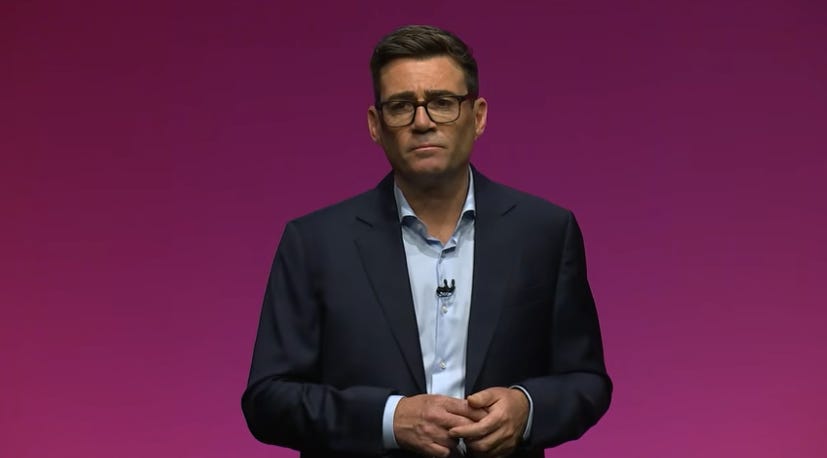
No point messing about. That was the best conference speech I’ve ever seen. At one point I lost all ability to speak and simply sat there mute, unblinking, wondering if I’d had an episode and this was all some kind of hallucination. I’d rub my eyes and stare closer and yet it was all still really happening. It was all real. The prime minister of Great Britain and Northern Ireland was speaking honestly about our problems and committing to the solutions.
For a long time now, we have been stuck in a conspiracy of silence. Privately, in whispered conversations in the corners of Westminster bars, people will acknowledge the world as it really is. They will nod wisely and with weary resignation as they acknowledge that the electoral system is broken, social care is in a state of decay, the pensions triple-lock is unaffordable and Brexit has damaged us economically. But they will not do so publicly.
These truths are considered unsayable. You can’t go into an election promising a reduction in spending for the elderly - they’re the one demographic which is most likely to vote. They’ll murder you out there. You can’t suggest that we might return to Europe - you’ll open up that whole populist can of worms again. And most of all, you cannot entertain electoral reform, because it means you’ll never govern alone again. To speak these truths is to commit political death.
And now here is this guy, Andy Burnham. And he is just going to straight-up break those rules one by one. Mother of god, you think, what am I watching. How is this happening. What on earth is going on.
Simply put, he is acting with a degree of courage I never dared hope a prime minister would demonstrate. The commitments he made today would make Britain a kinder, wealthier, better country. But more than that, they would serve as a demonstration: that mainstream politics still has the strength to grapple with the problems Britain faces and solve them.
And now, inevitably, they all come out to play, teeth flashing in the dark. All the small politicians, doing exactly as predicted, a clockwork voice from a mechanised throat. “It’s frankly outrageous that Burnham is considering scrapping the triple lock,” Reform’s Robert Jenrick said. Unite’s general secretary Sharon Graham told the Times it would be “almost electoral suicide”. An anonymous Cabinet minister told Politico: “I would like to actually win the next election.” The Express front page read: “Scrap triple lock and you will face voter revolt.”
There’ll be more of them. Expect weeks of anonymous Labour MPs stressing the dangers. They are exactly the type who got us into this mess: unwilling to lead, unwilling to recognise reality for fear of offending voters, unwilling to solve long-term problems if it presents the slightest short-term risk.
Perhaps they’ll win. Probably they will. Perhaps all these ideas will be badly formed, or mutilated by compromise, or, more likely, become the latest victims of an attention economy in which there’s always something more immediate for a prime minister to focus on. Or perhaps the bond markets will take fright at the ambition and spiral badly, killing this glimpse of a better way of doing things.
But today felt different. Burnham could clearly see the dangers. He could spot precisely how he would be attacked. He knew just how exposed it left him. And he did it anyway.
“I accept I may pay a political price,” he said. “But someone has to go through the pain barrier and rip the plaster off.”
Subscribe now
Burnham made several commitments today, some more meaningful than others. Personally, I find the anti-neoliberalism stuff a bit simplistic. Neoliberalism’s hold over this country ended with Brexit, when the right turned its back on free trade and austerity economics, almost as an afterthought. That opened up a space for much more interventionist policy from Labour that it has eagerly inhabited ever since.
It was when Burnham turned away from his favoured topic of public ownership of services that he became more compelling. The prime minister promised a National Care Service: universal, free at the point of use, to which everyone contributes. It would be funded by the end of the triple lock - to be replaced by a double lock. The earnings leg has been kicked out, with the state pension rising by the higher of inflation or 2.5% from 2030, but with periodic adjustments if earnings in the economy are rising higher.
I caught my breath as he said it. Christ alive I thought, he was actually doing it. He was doing the thing they swore could never be done, because the electoral consequences were too severe.
Would that raise enough money? No, certainly not, no matter what he claims. There’ll be further painful decisions to make which Burnham did not mention today. A care service will be very expensive and savings from ending the triple lock will be modest in the short term, only building up over the long term.
But announcing the two measures in this way, side by side, provided the best possible way of convincing older voters to accept the change. It provided a moral foundation for what was taking place. It delivered a narrative and a mission, a comprehensible moral pathway. And just as importantly, it offered a signal to the markets that the government is prepared to take the big decisions necessary to get spending under control, even as it unveils one of the most ambitious spending proposals in recent years.
Subscribe now
One of the most noticeable aspects of Burnham’s personality is his sense of emotional presence. He really does look as if he is listening to people, as if he is present in the moment rather than going through the motions, doing the politician-kisses-baby thing.
This has stood him in good stead. I suspect that the manner this policy is being presented comes from countless conversations on the doorstep, from an intuitive understanding of what it takes to win people over to your position.
That doorstep conversation is very easy to visualise. The deal is clear: A move from a triple to a double lock, but a guarantee that the state pension rises every year. And in exchange, guaranteed free care.
He presented this idea by speaking about his grandmother. When she went into the care home, someone pocketed her engagement ring. The care she received was “not worthy of the name”. And despite all that, they’d had to sell her house to pay for it. “What an indictment of my generation of politicians,” he said. “Too cowardly to fix something as basic as the care we give each other”.
Then he spoke directly to care workers themselves, and noted the way they had been ignored by politicians for decades, working on pitiful wages in terrible conditions. “You are not invisible to me,” he said. “I see you. I thank you. And I am sorry that my profession has let down yours for so long.” He either believes this stuff or he is one of the best actors I have ever seen.
I think he believes it. For what it’s worth, I think the bloke we see on that stage is the same bloke he is with the cameras off. There’s a killer in there, of course. You don’t get to this level without being a killer in some way. And there is obviously a massive ego hiding behind that unassuming demeanour. But the basic effectiveness Burnham demonstrates comes, I suspect, from a sense of authenticity and a connection with his feelings.
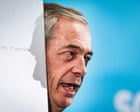
Until recently, I thought Nigel Farage was the most effective communicator in modern politics. Now, the Reform leader seems angry, thin-skinned, self-pitying, whiny, absurd. What we witnessed today was a masterclass in political communication which makes Farage look like an amateur. Look at how he did it: A personal story, an appeal to the emotions, a radical proposal, an explanation of why it is fair, a push for voters to back him. The heart and the head operating as one.
Subscribe now
Shortly afterwards, he spoke about his father, who died a couple of weeks ago. You could tell that he was about to address it because suddenly he stopped talking. There was silence. And that silence expanded for what felt like a very long time - perhaps 30 seconds, aeons in the world of public speaking. Eventually the audience got nervously behind him, applauding, cheering him, getting to their feet. He thanked them and finally found a way of continuing.
In the minutes that followed he delivered probably the most effective defence of the United Kingdom over Welsh and Scottish nationalism that I have witnessed, one which casually dismissed the usual transactional statements for a heartfelt expression of a shared history and the endless advantages of combining many nations in one.
“Whatever its flaws, this country gave my dad a good life,” he said. He fought through the tears, he battled his way through the words, trying to get them out. But around this point, he seemed in genuine danger of actually breaking down on the stage.
If I was on his staff I think I would have advised against this section. The feelings were just too raw, too exposed. It was too dangerous to allow yourself to feel them at an event like this, in the white light of the cameras, at one of the key political moments of the year. This country now accepts men crying, but I am not sure it can handle a leader literally breaking down in front of a large audience. But obviously I would have been wrong. In fact, I sat there and realised with some embarrassment that I was myself crying.
“Britain is not perfect,” he said. “It could be better and we will make it so. But it still stands for something worth saving and worth fighting for.”
Imagine his opponents watching this. Badenoch. Farage. Swinney. All the way through the speech, they’ll have noticed the opportunities he offers them. Attack line here, vulnerability there. Death tax, dementia tax, whatever. We know how that old turgid game plays out. But deep down, in their bones, they would surely think: fuck.
How do you fight this? How do you take on someone who is able to speak with this degree of commitment and emotional intelligence, this ability to bring people with him?
Subscribe now
On Brexit, Burnham promised to lay out options for a long term relationship. He framed this as a break, which means that he clearly intends to go further than Starmer’s vision of inching alignment. I suspect the options will involve associate status (whatever that is, very much tbc), customs union membership, single market membership and full membership.
There is now a clear battleground for pro-Europeans to enter and an administration which seems open to listening to what they have to say. The idea of Labour going into the next election with a commitment to Rejoin is unlikely, but it is not fanciful. There is much to play for here.
On electoral reform, the commitment was much firmer: a national commission, with whatever proposals emerge from it in the Labour manifesto at the next election.
Sometimes when you write these things and you feel years of history weighing down on each key as you touch it. For how long have reformers fought this battle? How many decades of thwarted hopes and aspirations? And each time we would torture ourselves with the same seemingly unsolvable riddle: How can you ever get a prime minister to implement reform when any party in government will by definition benefit from the system as it is?
And now here he is, this guy, and he is doing it. Perhaps it had to be someone like him - someone from inside the system who saw what was wrong with it, left, and could return as an outsider. Regardless, it is actually happening. Things which reformers have hoped for their entire lives are now tantalisingly close. In touching distance.
Subscribe now
I am slightly baffled by what is going on here. I am not used to being happy. It does not suit my disposition. But what we saw today was a masterclass in how politics should be done: a man who was prepared to tackle problems rather than avoid them, prepared to raise solutions even though they leave him exposed, prepared to defend radical causes his predecessors would have run a mile at. And more than that, we saw it done with a level of verve and skill which is practically unheard of in modern politics.
There’s not a lot of times like this. Not a lot of times when the stars align and things that previously seemed impossible become tenable.
It would be easy to be on a face of studied cynicism at this point. It is obviously true that plenty can go wrong, the plans are plainly very sketchy, and the obstacles facing him are immense. You always look more sensible by being guarded than you do by being impressed. But we have to be able to recognise and celebrate the things we’ve always called for when they finally come to pass. And today, they came to pass.
What thing to witness.
 Log in